
WHY BOOK READING?
Book reading helps to build relationships between adults and children. It also allows for children to learn about the world they live in, learn important concepts about society and people, and build their vocabulary and understanding of narrative sequences and interesting sound patterns.
In this section, you will:
- Understand how book reading can be used effectively
- Develop an understanding of print referencing
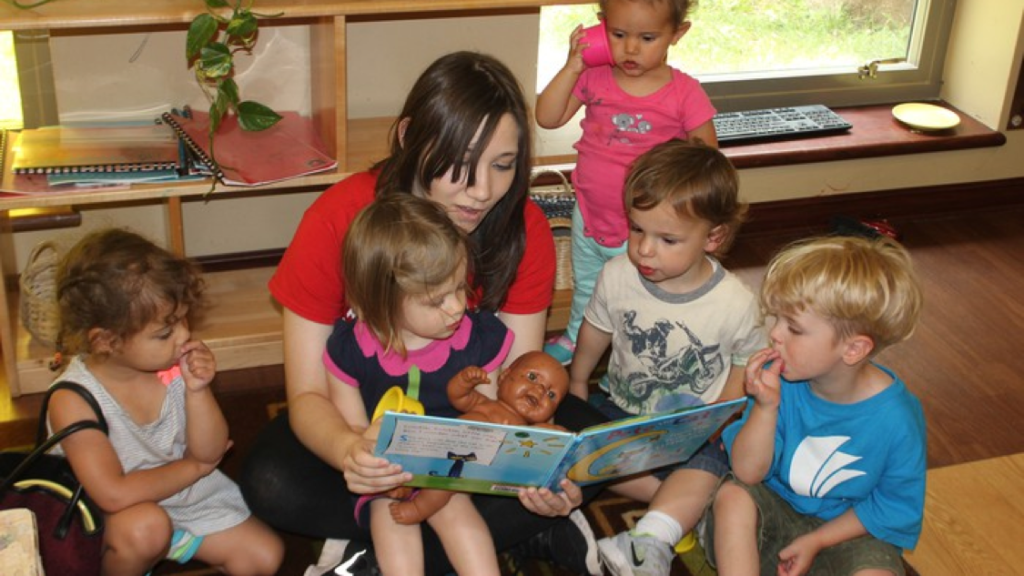
STAR READ-ALOUD PRACTICES BUILD CHILDREN’S PRINT KNOWLEDGE THROUGH SHARED STORYBOOK READING.
Early experiences with books provide opportunities to develop print knowledge.

STAR READ-ALOUD PRACTICES BUILD CHILDREN’S PRINT KNOWLEDGE THROUGH SHARED STORYBOOK READING.
Shared book reading is an early learning experience that can expand a child’s knowledge of print. With strategic implementation, adults can modify the way they read with children to focus their attention on print. Book-reading experiences, in any setting, provide explicit opportunities for children to engage with print concepts.
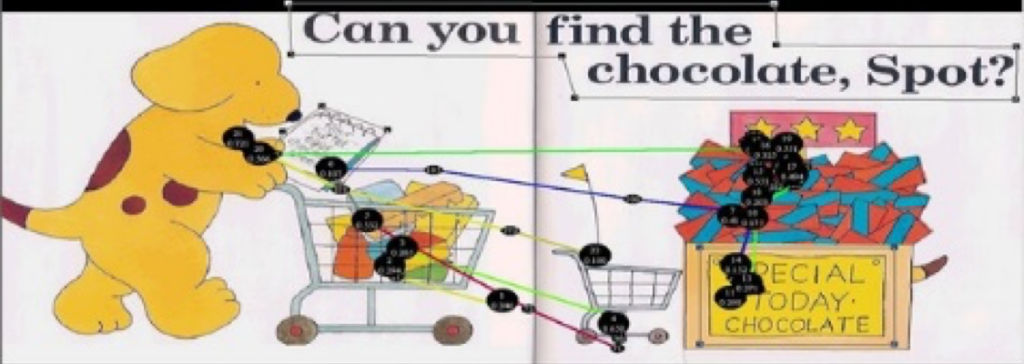
Adults can explicitly help children to look beyond the pictures when looking at storybooks, and also to attend to print in the book.
This image shows a child’s visual attention to print when looking at a storybook. The black dots are her visual fixations when looking at the pages of a book. As you can see, this child (like most preschoolers) focuses almost exclusively on the pictures.
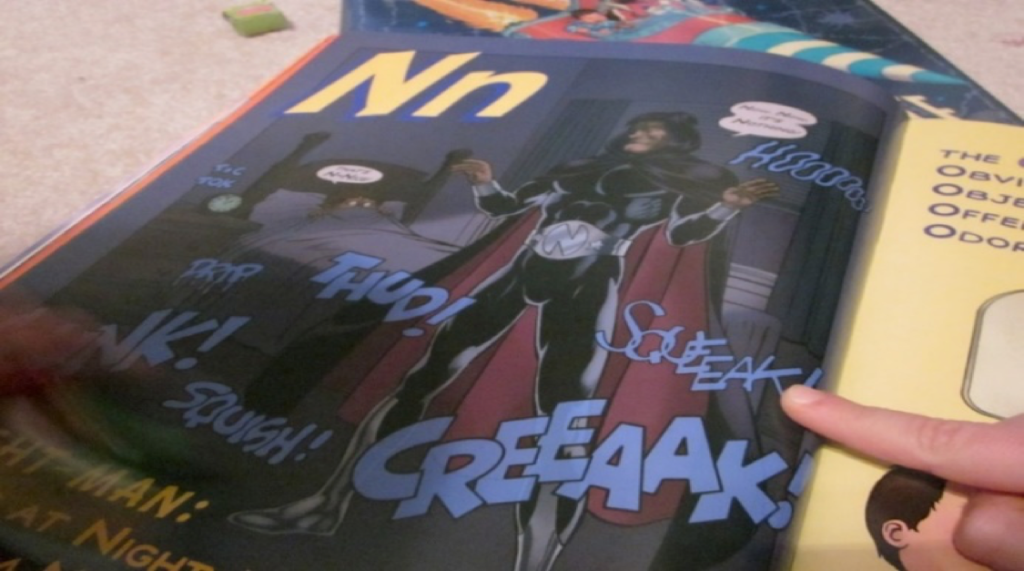
Research shows:
We call this print referencing.
Children rarely pay attention to print during shared book reading unless directed to do so.
Adults can use strategies to encourage children’s attention on print and by doing so can improve children’s print knowledge.
Watch our video below on how print referencing during shared book-reading supports emergent literacy development.
VERBAL & NON-VERBAL REFERENCES TO PRINT

How do we cultivate a focus on print for our children?
Verbal references: Asking questions and making comments about print

How do we cultivate a focus on print for our children?
Nonverbal references: Pointing and tracking print with our fingers
Watch a demonstration of a teacher using explicit print-referencing techniques when reading the storybook When Sophie Gets Angry, Really, Really Angry to a group of children.
Supporting research for print referencing:
- Print referencing can be used by any adult—parent, educator, SLP, librarian, child-care provider—when reading with children.
- Print referencing improves print knowledge in children who are typically- developing as well as those with learning concerns, including children with disabilities.
- Intentionally directing a child’s focus to print during shared book reading is the key to making print referencing successful.